
Is Your Baby Ready for Food? Watch What Their Mouth Is Telling You
Little Bites Big Steps Newsletter September 2026
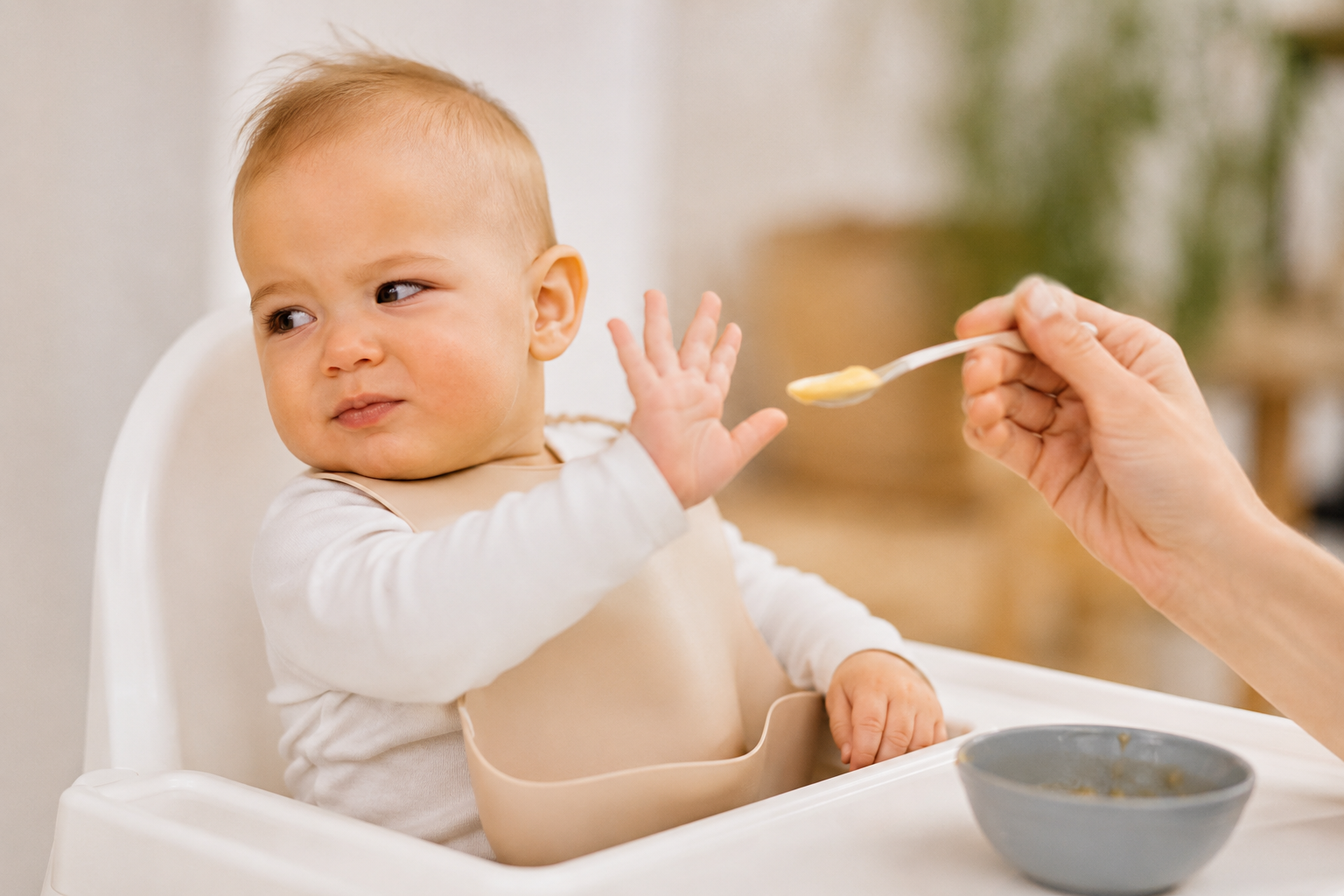
Starting solid foods is an exciting milestone. Parents buy the little spoons, pull out the high chair, choose the first food—and wait for that first bite.
But before we focus on what a baby eats, we need to pay attention to something even more important:
Is your baby ready to eat?
Most babies begin exploring foods around 6 months of age, but readiness is about more than the calendar. A baby who is ready for food will begin showing you.
They may:
Sit upright with good head and neck control.
Watch you while you eat.
Reach toward food or bring objects to their mouth.
Lean toward the spoon.
Open their mouth when food approaches.
Accept food into their mouth and begin learning how to move and swallow it.
These small behaviors are important. Your baby is communicating with you long before they can say, “Yes, I want that,” or “No, I've had enough.”
What Happens When the Signals Change?
This is something I especially want parents to notice.
Maybe your baby initially opened their mouth when you brought the spoon toward them.
Then one day they stopped.
Maybe they used to turn toward your hand when you touched their cheek or approached their mouth.
Now they turn away.
Maybe they close their lips tightly when the spoon comes near.
Don't force it.
Stop, give your baby a break, and try again another time.
A baby turning away or closing their mouth may simply be telling you, “I'm finished,” “I'm not hungry,” or “I don't want that right now.” We want babies to learn that those signals will be respected.
Feeding should be a relationship—not a battle.
But What If Your Baby Begins Shutting Down?
There is a difference between occasionally refusing a bite and developing a pattern of avoidance.
Pay attention if your baby:
Consistently refuses to open their mouth for food.
Turns away as soon as food approaches.
Becomes upset when you bring your hand, spoon, washcloth, or food near their face.
Will not tolerate someone touching around their lips or mouth.
Cries, arches, stiffens, gags, coughs, or becomes distressed during feeding.
Previously accepted foods and suddenly stops.
Accepts fewer and fewer textures or foods.
Seems frightened or highly guarded during meals.
This is when I don't want families to wait.
Sometimes parents are told, “They'll grow out of it,” or “Just keep trying.”
Repeated exposure can absolutely be part of learning to eat. But repeated exposure is very different from repeatedly pushing past a baby's signs of distress.
If a baby begins protecting their mouth and face, consistently refusing food, or becoming distressed when someone approaches them with food, there may be more going on. Sensory difficulties, oral-motor challenges, swallowing problems, reflux, pain, medical issues, or previous uncomfortable feeding experiences can all affect feeding.
Early Help Can Make a Difference
You do not have to wait until a child is eating only a handful of foods or every meal has become stressful before asking for help.
A feeding and swallowing evaluation can look at the whole child:
Can they safely swallow?
Can they move food effectively in their mouth?
Are they comfortable with touch around the face and mouth?
Are textures appropriate for their developmental skills?
Is something making eating uncomfortable?
What is the child communicating through their behavior?
The goal isn't simply to get food into a child's mouth.
The goal is to help a child develop a safe, comfortable and positive relationship with eating.
So when you offer your baby that little spoon, don't just watch the spoon.
Watch your baby.
An open mouth can say, “I'm ready.”
A turned head can say, “I've had enough.”
And a baby who repeatedly shuts down may be saying, “Something about this is hard for me.”
Listen early.
Because sometimes the most important feeding skill we can teach parents isn't how to get a baby to take another bite.
It's how to recognize when their baby is asking for help.
If you have concerns about your child's feeding, swallowing, food acceptance, or oral development, talk with your pediatrician and consider an evaluation with a speech-language pathologist who specializes in pediatric feeding and swallowing.