
Little Bites Big Steps March Newsletter 2026
Mealtime isn’t just about food.
It’s about safety, comfort, regulation, and connection.
For many little ones—especially those with feeding challenges—the environment can make or break a meal before the first bite is even offered.
This month, we’re focusing on how small environmental changes can create big success.
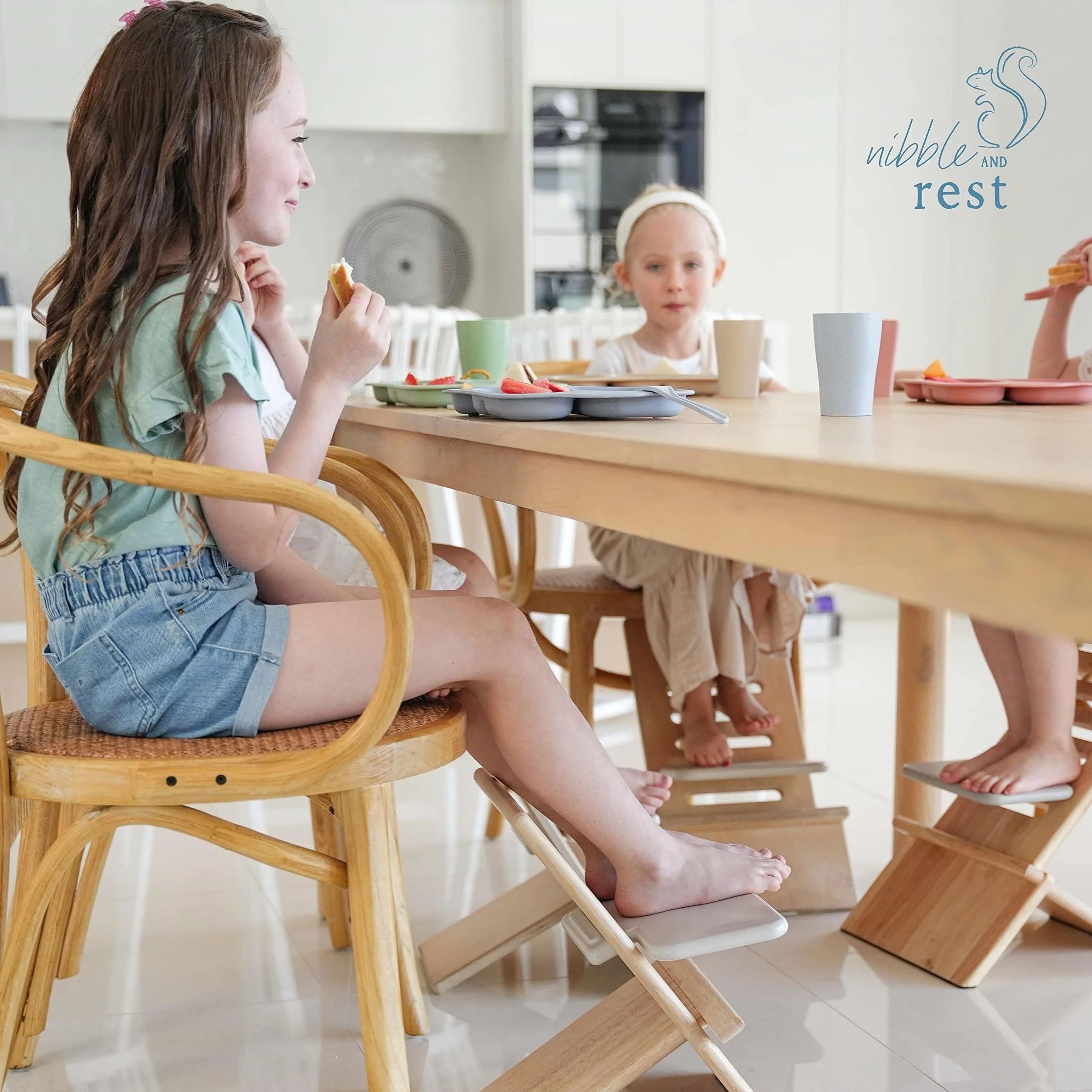
Creating the Right Environment for Eating: Setting Little Ones Up for Success
Mealtime isn’t just about food.
It’s about safety, comfort, regulation, and connection.
For many little ones—especially those with feeding challenges—the environment can make or break a meal before the first bite is even offered.
This month, we’re focusing on how small environmental changes can create big success.
1. Positioning Matters More Than You Think
A child who feels unstable or unsupported will use all their energy trying to stay upright instead of learning to eat.
Look for:
Feet supported (on a footrest or sturdy surface)
Hips and knees at about 90 degrees
Back supported
Table at elbow height
Neutral head position (not tipped back)
A booster seat with a footrest can be a game-changer for toddlers and preschoolers.
When children feel grounded, their body relaxes — and eating becomes easier.
2. Comfort Creates Safety
Children eat best when they feel safe.
Ask yourself:
Is the chair too big?
Are they kneeling?
Are they wiggling to feel secure?
Is the lighting harsh?
Is the TV overstimulating?
Sometimes, simple changes help:
Soft lighting
Less noise
A consistent mealtime space
A small cushion for grounding
A familiar placemat
Feeding is sensory.
When the nervous system feels calm, eating improves.
3. Routine Builds Regulation
Young children thrive on predictability.
Try:
Eating at roughly the same times each day
Sitting at the table (even if just for exposure)
Ending meals after 20–30 minutes
Avoiding grazing throughout the day
A structured rhythm helps hunger cues develop.
4. Pressure-Free Exploration
The goal isn’t “take a bite.”
The goal is:
Sit comfortably.
Tolerate food on the table.
Touch.
Smell.
Interact.
Exploration builds trust. Trust builds eating.
5. Connection Before Correction
Your child reads your face before they touch the food.
Instead of:
“Take a bite.”
Try:
“I love how you’re sitting so tall.”
“That orange looks juicy.”
“You touched it! That’s brave.”
Connection grows confidence.
March Takeaway
Before changing the food…
change the environment.
A stable seat.
Supported feet.
Calm energy.
No pressure.
Little adjustments create big progress.
From the Star Center Foundation
We believe feeding success doesn’t start with force.
It starts with safety, education, and support.
If you need help setting up your child’s feeding space or have questions about positioning, sensory needs, or mealtime structure, we are here to bridge that gap.
835 Sharon Dr, Suite 280
Westlake, OH 44145
216-320-2456
starcenterfoundation.org
Bridging Care with Compassion